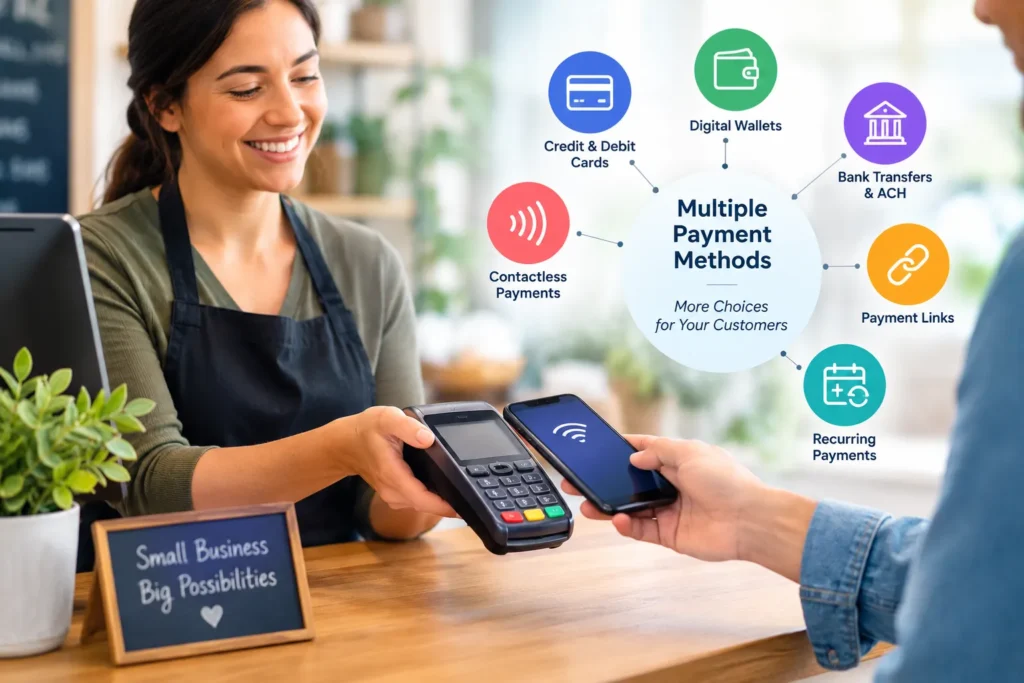
Multiple payment methods for small businesses can help with checkout, but the addition of too many payment methods could quickly lead to more work. Separate screens, reconciling tasks, and refund processes can become challenging to manage. For small businesses with limited resources and time, it is a challenge to find the ideal balance between convenience for customers and efficiency.
So, how do you provide more options to pay without creating complex setups? This guide will help you choose the right payment methods, connect them efficiently, and keep costs manageable
Why Small Businesses Need Multiple Payment Options
Customers may choose different methods to pay based on where and how they shop. A local shop may require digital wallets and cards, while a service company might benefit from payments via ACH or links.
Different payment options can make checkout easier. The multiple payment methods for small businesses you choose should depend on customer preferences, sales channels, transaction sizes, and costs.
Choose Payment Methods for Small Businesses Based on Customer Needs
Begin by examining how customers pay currently and what choices they want. The multiple payment methods for small businesses you choose should meet customer needs without requiring additional tools.
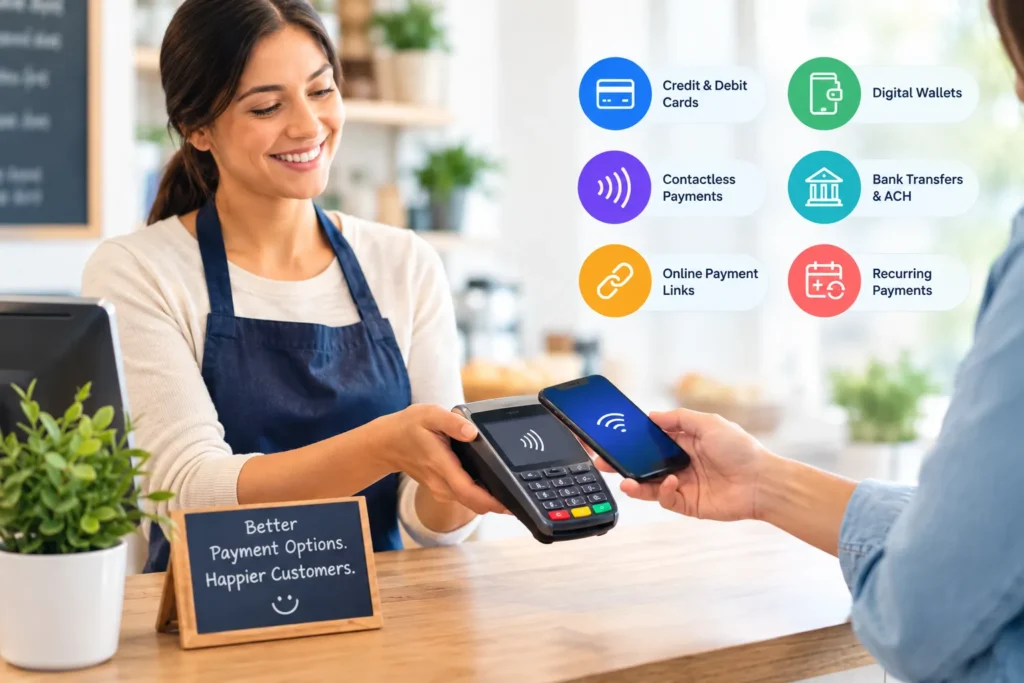
Payment options for small businesses are:
- Debit and credit cards
- Digital wallets
- Bank transfers or ACH
- Online payment links
- Invoicing and Recurring payments
Compare fees, settlement time, and refunds, as well as hardware and compatibility, prior to adding one.
Connect Multiple Payment Methods Through One System
Managing payments through one system can make small business payment processing easier. An appropriate platform will connect reports and transactions.
Multiple payment gateway integration can connect different types of payment to an online checkout or business system. Find support for methods that are required in connection with accounting or point-of-sale tools.
How to Add Payment Methods Without Creating More Work
1. Review your current setup. Look for payment problems, customers’ requests, and gaps in your checkout.
2. Select useful options. You can add additional payment methods only if they serve clearly defined purposes or meet a customer need.
3. Compare costs and compatibility. Review the fees for transactions, hardware requirements and settlement time, as well as requirements for integration.
4. Connect payment channels. Utilize small business-friendly payment systems whenever you can so that transactions are easier to track.
5. Test before launch. Review payment reports, refunds, and settlement records.
This process helps businesses add multiple payment methods without creating a separate workflow for every transaction.
Keep Small Business Payment Processing Simple and Secure
A simple setup can make it easy to track what was paid, when it was paid, and where the money was deposited. A consistent process for receipts, refunds, and reconciliation will reduce the chance of errors.
Security is also important. Choose reputable companies, maintain software updates, restrict access to the system, and keep track of transactions for unusual behavior. Examine security requirements for your provider prior to making changes.
When Additional Payment Methods Are Worth Adding
Another option could be appropriate if customers often demand it, a business launches a new channel for sales, or if the method is suitable for an exact transaction. For instance, a service business might choose to use payment links for invoices.
However, multiple payment methods for small businesses can be unproductive if each one requires an individual account or dashboard process. If most customers do not use a payment method, the added complexity may not be worth it.
Conclusion
Multiple payment methods for small businesses can give customers more flexibility while keeping payment processing manageable. Review your checkout process, identify clear gaps, and add options that support both customer needs and daily operations.
You can also visit Digital AI Cards to find trusted merchant service providers in your area and explore local business service options.
Frequently Asked Questions
What are the most common payment methods for small businesses?
Digital wallets, cards, ACH transfers, and payment links are all very common. Multiple payment methods for small businesses may combine these choices. The ideal mix will depend on the customer’s preferences and the sales channels.
How many payment options should a small business offer?
There isn’t a set number. Provide enough options to satisfy customer requirements without making management difficult. A lot of options that are not used could create unnecessary burdens.
What are the benefits of multiple payment options?
They allow customers to be flexible and make it easier to check out across all sales channels. They also offer a variety of methods of acquiring payments.
Can a small business manage multiple payment methods through one system?
Yes, provided it supports the necessary payment options. Centralized tools are able to simplify records and reports.
What is multiple payment gateway integration?
This is when you connect payment services to a site or checkout system. The configuration is dependent on the service providers and software.
How can a business reduce payment processing complexity?
Make use of compatible tools, stay clear of unnecessary choices, make refunds more consistent, and keep records in order. Simple workflows make reconciliation a breeze.
Are digital wallets useful for small businesses?
They can be useful when customers prefer to pay through digital wallets. Make sure the wallet is compatible with your payment system before adding it.
Should a small business accept every available payment method?
No. It could result in additional charges and administrative tasks. Select methods that meet the needs of customers and business operations.
How should businesses manage multiple payment transactions?
Keep a consistent record and make sure that payments are reconciled against the sales and deposit reports. This makes discrepancies easier to spot.
What should a business check before adding another payment method?
Review fees and customer demand, as well as settlement timing, security requirements, refunds, and integration. These aspects show whether this option is suitable for your business.