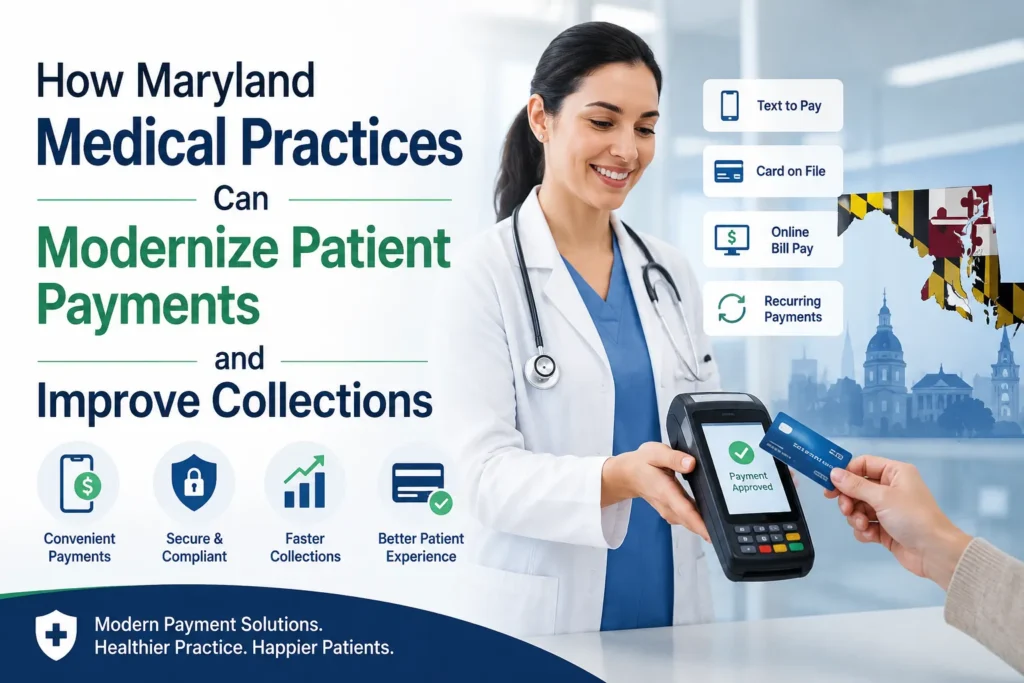
Money moves slowly in healthcare. The first thing to understand is that patients expect something different now. They pay for everything else on their phones. They want the same convenience for medical bills. Practices that modernize their healthcare payment solutions collect faster and keep patients happier.
Most Maryland medical offices still rely on paper statements and manual follow-ups. That is exactly where collections go to die. Taking a few smart steps can transform the whole process.
Why Modern Payment Solutions Matter Now
Patients have changed. They do not want to log into portals or wait on hold. They want to click a link and be done with it . The healthcare payment processing market is growing fast, projected to hit $48 billion by 2030 . That is because everyone is realizing the old ways do not work.
For Maryland practices, the timing is right. The state is shifting toward value-based care models like MDPCP, where payment reform is front and center . Modern payment systems align perfectly with this shift.
Healthcare Payment Solutions: What Actually Works
The right healthcare payment solutions make life easier for patients and staff. Here is what works.
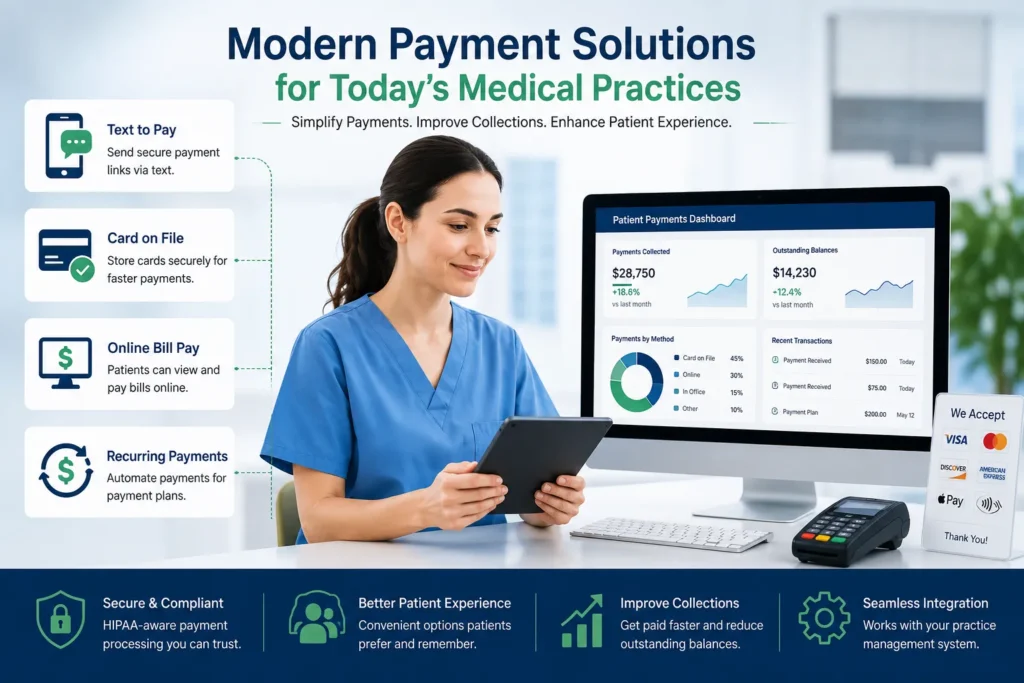
- Text-to-pay: Patients get a text with a secure link. They click, review, and pay in seconds. No apps to download. No passwords to remember . This works especially well for copays and small balances.
- Pre-authorization: The practice holds a small amount on the patient’s card before the appointment. After the visit, the actual charge goes through. This eliminates chasing no-shows and failed payments .
- Card on file: Securely storing patient card details means automatic billing after the visit. Patients opt in once. No more forgotten payments .
- Online bill pay: A simple portal where patients can see their balance and pay instantly. No phone calls needed.
The Maryland Context: What Makes This Different
The Maryland Primary Care Program gives practices a guaranteed care management fee for Medicare patients . But practices must meet performance standards. Good patient collections are part of the equation.
The state is also piloting payments that address social needs. HEART payments fund things like transportation and home remediations . Modern payment systems help track these special payments and ensure proper billing.
Patient Payment Processing: Keeping It Compliant
Financial institutions handle most of the compliance burden for patient payment processing Under HIPAA, they are exempt from the Administrative Simplification Regulations . That means practices do not need a Business Associate Agreement for routine payment processing.
But there is a catch. If a practice builds its own payment portal or uses a third-party system that handles Protected Health Information, a Business Associate Agreement is required . For most off-the-shelf solutions, this is not an issue.
Choosing a medical merchant services provider with healthcare experience helps practices improve patient collections, support HSA/FSA payments, and integrate securely with existing practice management systems.
Practices now need payment processing for medical offices that works for virtual visits.
A Healthcare POS System That Fits
Modern healthcare POS system options go beyond the old countertop terminals. Cloud-based systems integrate with electronic health records and practice management software . They handle:
- Copay collection at check-in
- Balance collection at checkout
- Payment plans for larger balances
- Refunds and adjustments
These systems also capture payment trends. See which patients pay on time. Spot patterns in payment delays. Use the data to improve collections. Payment solutions for healthcare providers that automate collections free up staff.
How Maryland Practices Can Start Modernizing
The simplest first step is moving away from paper statements. Send bills by email or text. Include a pay-now link. This alone cuts collection time significantly.
Next, implement card-on-file for regular patients. This is a game-changer for practices with recurring visits. Patients appreciate the convenience.
Finally, consider a healthcare payment solution that integrates with the practice management system. This eliminates duplicate data entry and reduces errors.
A Real-World Example
Imagine a patient comes in for a routine visit. Before the appointment, they get a text with a link to check in and verify insurance. They see their estimates. They approve the charge. After the visit, the system automatically processes the copay. The patient gets a receipt by text. The practice gets the funds within a day.
Conclusion
Modernizing patient payments is not about technology for its own sake. It is about getting paid faster and making patients happier. Maryland practices have unique opportunities with state payment programs. But the basics of collections still apply. The practices that adapt will collect more and stress less.
Frequently Asked Questions
What are healthcare payment solutions and why do practices need them?
Healthcare payment solutions are systems that help medical practices process patient payments more efficiently.
How do patient payment solutions improve collections?
They automate payment reminders, offer convenient payment methods, and reduce friction. Patients pay faster when they can click a link on their phone.
Is medical credit card processing different from regular processing?
Medical processing must account for healthcare-specific rules, including potential HSA/FSA payments. Some providers also offer patient financing options.
What is a healthcare POS system and what does it do?
A healthcare POS system handles payment processing at the practice. It integrates with the practice management system to capture copays, apply balances, and process refunds.
How do I choose the right medical merchant services provider?
Look for a provider that specializes in healthcare. They understand compliance, can handle HSA/FSA payments, and offer integration with your existing systems.
What payment options should I offer patients?
Offer multiple options: text-to-pay, online portal, phone payments, and in-office card processing. Store cards on file for repeat patients. Offer payment plans for larger balances.
How does payment processing work with telehealth?
Patients receive a payment link by text or email after their virtual visit. They click and pay securely. No in-person interaction needed. This is the same technology used for online bill pay.
What compliance issues should I watch for in healthcare payment processing?
Financial institutions handle most security and privacy requirements. However, if you use a custom payment portal or a third-party system, you may need a Business Associate Agreement with that vendor.
Can modern payment solutions help with value-based care models?
Yes. They track payments by patient, by service, and by payer. They also help collect patient payments more efficiently.
How long does it take to implement a new healthcare payment solution?
Most cloud-based solutions can be set up in weeks, not months. Integration with existing systems is usually straightforward.