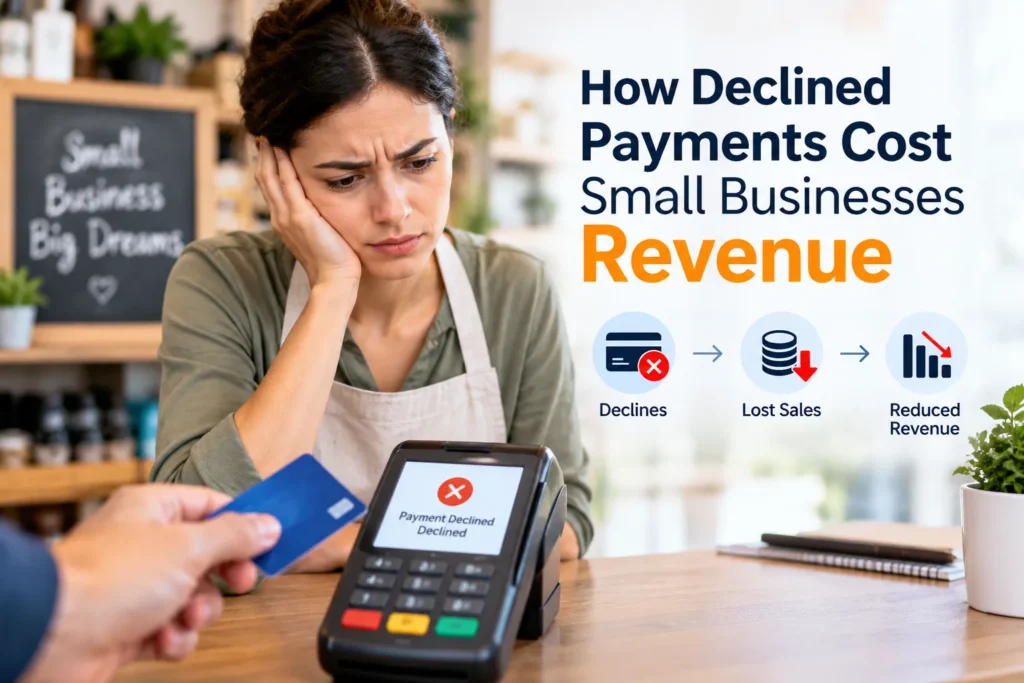
A few seconds of inconvenience is a lot for a small business when a payment fails. A customer can just walk away or go to a different business or just forget about it. As declined transactions occur, the revenue can slowly decrease and lead to unwarranted bumps in the customer’s journey.
Fortunately, numerous payments that fail to come through can be detected and minimized. Knowing the reasons payments may fail, monitoring your credit card decline rates and having a clear recovery process will help companies save more sales.
Why Do Payments Get Declined?
When you get a payment declined message, it doesn’t necessarily indicate that the customer is low on funds. The reasons for declines range from lack of sufficient funds, expired cards, billing address not matching, suspicious transactions and spending activity, to name a few.
Sometimes, the issue is a short-term one. A transaction that is different from what the bank expects the customer to make can cause the bank to block it. Technical problems can also arise with businesses using payment processing, a payment gateway, or their bank. Understanding these causes is the first step toward reducing declined transactions.
What is a False Decline?
A false decline occurs when a legitimate transaction is denied, but was actually eligible to be accepted. This may occur if the fraud detection is too strict or if a transaction seems unusual to the issuing bank.
It is particularly frustrating since the customer may have the funds and a valid card. When they get a lot of failures without explanation, they will think that the business does not accept their method of payment and leave.
How Declined Payments Affect Revenue
Even a small number of declined payments can add up when a business processes hundreds or thousands of transactions. All the value loss in the failed purchase is immediate, but there may be longer term effects.
If the customer can’t checkout, then he can’t return. If a card expires during subscription renewal, then the subscription business also can lose its recurring revenue. A high decline rate can therefore affect both new sales and existing customer relationships.
It is important for businesses to keep an eye on declined transactions, because if there is a significant number of these occurring, payment issues may be a significant revenue drain.
Soft Declines vs. Hard Declines
Not all failed transactions need the same handling. Soft declines are usually temporary and can be fixed by retrying or updating payment details or simply requesting that the customer check with their bank.
If your credit is being rejected for the card, it is more likely to be a hard decline, meaning there is a permanent issue, such as a closed account or bad credit. These transactions can be repeated, but will not likely be helpful and may lead to bad customer experience.
Understanding the difference enables businesses to develop more intelligent payment recovery procedures, rather than engaging in the same action from every payment declined message.
What Causes High Credit Card Decline Rates?
If businesses are seeing their credit card decline rates increase they should consider going beyond the singular customer. The checkout process, payment gateway, fraud settings, types of cards and transaction patterns can also influence payment performance.
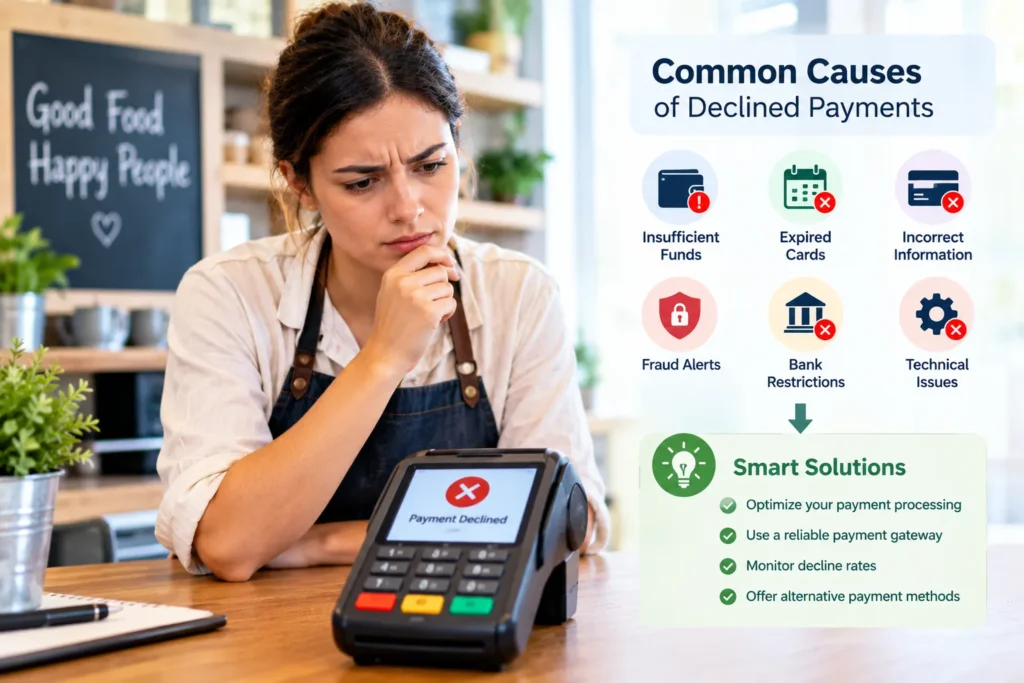
Common causes include:
- Outdated customer card information
- Incorrect billing or CVV details
- Overly strict fraud filters
- Expired cards
- Insufficient funds
- Bank security blocks
- Technical payment errors
- Poor payment retry processes
- International or unusual transactions
Any international or declined transactions will require you to obtain the bank’s opinion.
Businesses can take several practical steps to reduce card decline rates.
What to Do When a Payment Is Declined by the Bank
When a payment declined by bank message appears, the customer may need to contact their card issuer. The bank may be able to tell you if the transaction was denied due to insufficient funds, fraud protection, spending limits or another problem with the account.
The next step should be easy for businesses. Don’t show a generic error message, show a simple error message that lets the customer know that they should check their card information, if they wish to use a different payment method, or contact their bank. This can come in handy to get some of the declined transactions back before the customer walks away.
Track Payment Failures Over Time
If there is one transaction that fails, this is not a big issue. If there is a steady rise in the number of declined transactions, however, the payment processing or customer experience problem may be present.
Measure payment method, transaction type, customer location and reason code (if available) declines. This allows easier identification of unusual patterns and helps identify if the problem is the customer, bank, fraud control or payment system.
Conclusion:
Payment failures are a by-product of business operations and should not be seen as a hurdle that can’t be overcome. By learning what are common causes of decline, recognizing false declines, monitoring the rate of credit card decline rates, and developing improved recovery, small businesses can recover more genuine sales.
The aim isn’t to get rid of all failed payments. It’s about recognising declined transactions as a preventable issue, and making it as easy as possible for legitimate customers to make their purchases.
Frequently Asked Questions
What are the most common reasons for declined transactions?
Insufficient funds, incorrect card information, expired cards, fraud alerts, bank restrictions, and technical payment issues are common causes.
What is a false decline?
A false decline occurs when a legitimate transaction is rejected even though the customer has a valid payment method and could otherwise complete the purchase.
What are soft declines?
Soft declines are usually temporary payment failures that may be resolved through a retry, updated payment information, or customer action.
How can businesses reduce card decline rates?
Businesses can improve checkout, update expired payment information, optimize fraud rules, use smart retries, and offer alternative payment methods.
Does a payment declined message always mean insufficient funds?
No. A bank may decline a payment because of fraud protection, incorrect information, spending limits, technical problems, or other account restrictions.
Why should businesses track credit card decline rates?
Tracking decline rates helps businesses identify payment problems, recognize trends, and determine whether failed transactions are costing significant revenue.
Can declined payments affect recurring revenue?
Yes. Failed subscription or recurring payments can interrupt revenue and may cause customers to cancel if payment problems are not resolved quickly.
What should a customer do after a payment is declined by bank?
They can check their card details, try another payment method, or contact their bank to find out why the transaction was blocked.
Can better fraud protection reduce payment declines?
It can, but fraud systems need to be balanced carefully. Overly strict rules may increase false declines and reject legitimate customers.
How often should a business review payment decline rates?
Businesses should monitor them regularly, especially after changing payment providers, fraud settings, checkout systems, or billing processes.